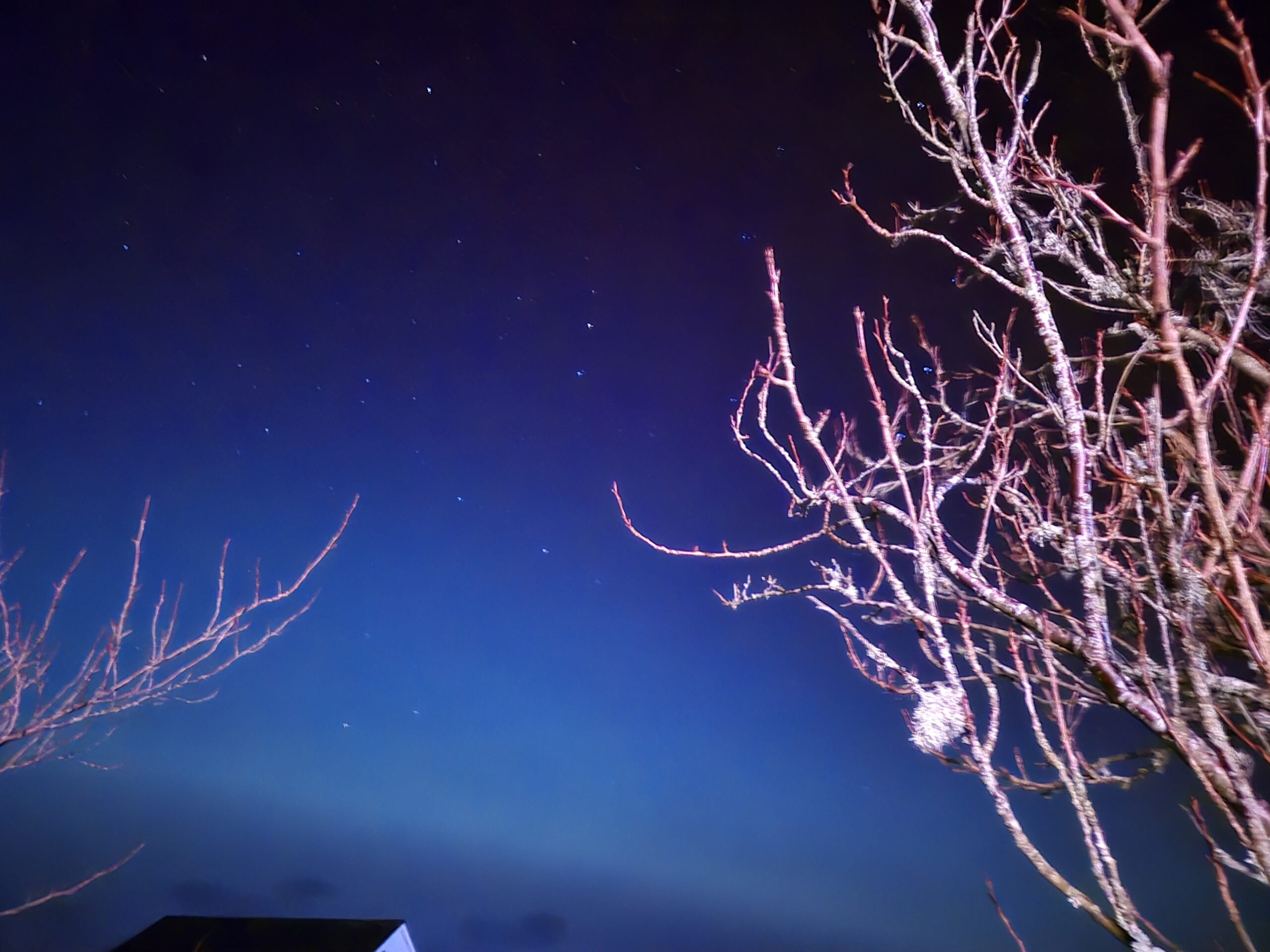
From Sticks to Stars
The Conditions That Allow Life to Become
A manifesto on the origins of The Conditions Lens™
© Thomas Mountney, 2026
The Conditions Lens™
All rights reserved.
A child picks up a stick.
A child picks up a stick.
To some, it is only a stick.
A thing from the ground. A possible hazard. A mess waiting to happen. Something to be taken away before anyone gets hurt.
But to the child, it may be something else entirely.
A wand.
A tool.
A bridge.
A sword.
A fishing rod.
A walking staff.
A boundary.
A question.
A possibility.
In that small moment, something much larger is taking place.
The child is not simply holding an object. The child is meeting the world.
They are feeling weight, texture, balance and resistance. They are testing distance, strength, sound, movement and control. They are discovering what the world allows, what it refuses, what it invites and what it teaches.
The stick is not separate from the child’s development. It becomes part of it.
And the adult nearby matters too.
One adult may say, “Put that down.”
Another may say, “Careful where you point it.”
Another may step closer, watch quietly, and allow the child to discover what the stick can become.
Each response creates a different condition.
One closes the moment.
One manages the moment.
One protects the moment while allowing it to live.
This is where the Conditions Lens begins.
Not with behaviour alone.
Not with learning outcomes alone.
Not with risk alone.
Not with the child alone.
But with the living conditions around the child.
Because children do not become in isolation.
They become through relationship.
They become through place.
They become through time.
They become through trust.
They become through the emotional atmosphere around them.
They become through what adults notice, allow, fear, rush, protect, interrupt or make possible.
A stick is never just a stick.
It is a meeting point between the child and the world.
And if we look closely enough, we begin to see that this is true of everything.
The World Answers Back
The child lifts the stick.
The ground has already shaped it.
The weather has already worn it.
The tree has already released it.
The season has already placed it there.
Before the child ever touches it, the stick has already belonged to a wider story.
But in the child’s hand, that story continues.
The stick scrapes against stone and makes a sound. It presses into mud and leaves a mark. It bends against grass. It taps a wall. It draws a line in soil. It becomes heavy when lifted too high, awkward when swung too quickly, useful when carried with care.
The child is not only imagining.
The child is listening with the whole body.
They are learning that the world has qualities: weight, texture, resistance, sound, distance, fragility and possibility.
The world does not sit silently while the child develops beside it.
The world answers back.
It teaches through contact.
It teaches through limit.
It teaches through invitation.
It teaches through consequence.
It teaches through wonder.
This is why the conditions around childhood matter so deeply.
A child cannot discover the weight of the world if everything has been made weightless. They cannot learn carefulness if every risk has been removed before it can be met. They cannot develop agency if every direction has already been decided. They cannot build confidence if there is no space to try, pause, fail, adjust and try again.
But this does not mean abandoning the child to danger.
It means recognising that protection and possibility must live together.
The adult is part of the world that answers back.
A sharp “stop” teaches one thing.
A frightened reaction teaches another.
A calm presence teaches another.
A thoughtful boundary teaches another.
The child learns not only from the stick, but from the atmosphere around the stick.
Is this world safe enough to explore?
Is my curiosity trusted?
Will my mistake be met with anger or guidance?
Can I test the edge of something without being shamed for reaching it?
In these small moments, children are not simply learning about sticks.
They are learning about themselves.
They are learning whether their hands can shape the world.
They are learning whether their questions are welcome.
They are learning whether adults see danger only, or possibility too.
They are learning whether the world is something to fear, consume, obey, avoid, or enter into relationship with.
This is the hidden work of childhood.
Not every lesson is spoken.
Not every curriculum is written.
Not every outcome can be measured.
Some lessons arrive through bark, mud, stone, water, wind and the quiet patience of an adult who knows when to step close and when to step back.
A stick, then, becomes more than a stick.
It becomes a conversation.
Between child and world.
Between freedom and boundary.
Between risk and care.
Between imagination and matter.
Between what is held, and what is allowed to become.
Nothing Living Becomes Alone
This is not only true for children.
It is true for all things living.
A seed does not become a tree because it is told to grow.
It becomes because the conditions around it allow growth to happen.
Soil.
Water.
Light.
Warmth.
Space.
Time.
Protection from what would destroy it too soon.
A bird does not return to a hedge because the hedge has been described as important.
It returns because the hedge offers shelter, food, safety, rhythm and a place to continue.
A bee does not survive because someone values biodiversity in theory.
It survives because there are flowers when flowers are needed, because there is habitat, because there is less poison, because the distance between sources of life has not become too great.
A river does not remain alive because we name it on a map.
It remains alive because the land around it allows flow, shade, oxygen, movement and renewal.
Life is not sustained by intention alone.
It is sustained by conditions.
We often speak as though things exist on their own.
The child.
The adult.
The family.
The school.
The worker.
The policy.
The tree.
The river.
The insect.
The planet.
But nothing living is truly separate from the conditions that hold it.
Every living thing is held inside a web of conditions. Some conditions nourish. Some restrict. Some protect. Some exhaust. Some quietly remove the possibility of becoming before anyone notices what has been lost.
A child without emotional safety may still appear present, but something inside them may begin to retreat.
An adult without rest may still appear capable, but their warmth may become harder to reach.
A bee without flowers may still fly, but it is already searching inside a landscape that has forgotten it.
A tree without healthy soil may still stand, but its future is already being decided beneath the surface.
A river may still move, but if the conditions around it are damaged, its life is being narrowed.
The Conditions Lens asks us to look beneath the visible thing.
Not only at what is happening.
But at what is making it possible.
Not only at what has gone wrong.
But at what conditions have been removed, weakened, distorted or denied.
Because life does not simply need encouragement.
It needs conditions in which continuity remains possible.
What We Remove Without Noticing
If life becomes through conditions, then we must ask a harder question.
What happens when those conditions are slowly removed?
Not always violently.
Not always deliberately.
Not always by people who mean harm.
Sometimes the conditions for life are removed quietly.
A field becomes a road.
A hedge becomes a boundary problem.
A stream becomes a drainage issue.
A tree becomes a risk.
A stick becomes a hazard.
A child’s question becomes a disruption.
An adult’s tiredness becomes a personal failure.
A community’s struggle becomes a statistic.
A living place becomes a site for development.
Little by little, the world becomes less available.
Less textured.
Less patient.
Less forgiving.
Less alive.
Children may still have toys, but fewer places to wander. They may still have activities, but less open-ended time. They may still have education, but less space to become. They may still be protected, but not always trusted. They may still be listened to, but only within the boundaries adults have already decided.
Adults, too, lose conditions.
They may still have responsibilities, but less rest. They may still have information, but less wisdom. They may still have connection, but less presence. They may still have work, but less meaning. They may still love deeply, but feel too stretched to show it gently.
And the living world loses conditions with us.
Birds lose hedges.
Bees lose flowers.
Soil loses depth.
Rivers lose shade.
Night loses darkness.
Seasons lose rhythm.
Communities lose memory.
Children lose contact with the ordinary wildness that once taught carefulness, patience, wonder and belonging.
This is not always noticed immediately.
A child can lose freedom slowly and still appear busy.
An adult can lose softness slowly and still appear capable.
A landscape can lose life slowly and still appear green.
A society can lose its way slowly and still appear efficient.
This is why the Conditions Lens matters.
It asks us to look beneath what is visible, not only at whether something still exists, but whether the conditions that allow it to live well are still intact.
A child may be present, but are the conditions for agency present?
An adult may be functioning, but are the conditions for warmth present?
A school may be open, but are the conditions for wonder present?
A policy may be active, but are the conditions for trust present?
A field may still be green, but are the conditions for life present?
A planet may still turn, but are the conditions for continuity being protected?
So much can remain on the surface while its deeper conditions are disappearing underneath.
By the time we finally notice what has been lost, we may discover that the loss began much earlier.
Not when the child stopped exploring.
But when exploration became inconvenient.
Not when the adult became harsh.
But when the adult became exhausted.
Not when the bee disappeared.
But when the flowers disappeared first.
Not when the river died.
But when the shade, flow, soil and care around it were slowly taken away.
The visible loss is rarely the beginning.
It is often the final sign that the conditions have already been broken.
The Pattern Beneath Becoming
The Conditions Lens began as pattern recognition.
But the pattern did not begin with childhood.
It began with the stars.
It began by looking at existence itself and asking a simple question: what allowed any of this to become?
Before there was a child holding a stick, there had to be a tree.
Before there was a tree, there had to be soil, water, light, atmosphere, gravity, time and the long unfolding of life.
Before there was life, there had to be a planet capable of holding it.
Before there was a planet, there had to be stars.
And before there were stars, there had to be conditions in the universe that allowed matter, energy, gravity, heat, distance and time to gather in ways that made becoming possible.
That was the first pattern.
Nothing becomes from nothing.
Nothing becomes without conditions.
And once I saw that pattern at the scale of stars, I began to see it everywhere else.
In the child holding the stick.
In the adult trying to stay gentle while carrying too much.
In the bee searching for flowers.
In the river needing shade and flow.
In the policy that looks supportive on paper but creates pressure in real life.
In the digital world shaping attention, identity and belonging.
In the quiet ways life either opens or retreats depending on what surrounds it.
The question was not only, “Why is this child behaving this way?”
It became something wider.
What allows anything to become?
When a child struggles, the question is not only, “What behaviour is this?”
It is, “What conditions is this child living inside?”
When an adult becomes impatient, distant or overwhelmed, the question is not only, “Why are they responding like this?”
It is, “What conditions have shaped their capacity to respond?”
When a policy fails to reach people well, the question is not only, “What does the policy say?”
It is, “What conditions does this policy create for the people who must live beneath it?”
When children lose contact with nature, the question is not only, “How do we get them outside more?”
It is, “What conditions have made the living world harder to reach?”
The surface problem is rarely the whole problem.
A child’s behaviour is not only a behaviour.
An adult’s stress is not only stress.
A policy gap is not only administration.
A digital habit is not only screen time.
A damaged landscape is not only environmental loss.
Each one points back to conditions.
This is the pattern beneath becoming.
Nothing becomes alone. And nothing breaks alone either.
When life flourishes, something around it is holding, feeding, sheltering, allowing or inviting it.
When life struggles, something around it has often been removed, weakened, rushed, narrowed, poisoned, over-managed or forgotten.
The Conditions Lens is a way of looking for that deeper pattern.
It asks us to pause before we blame the child, the adult, the family, the worker, the community, or the living world for failing to survive what has been taken from it.
It asks:
What is being asked of this life?
What is being provided?
What is being denied?
What is being protected?
What is being interrupted?
What is being made possible?
This does not remove responsibility.
It deepens it.
Because once we see that life is shaped by conditions, we can no longer pretend that outcomes appear from nowhere.
We become responsible not only for what we demand from life, but for what we create around it.
Around the child.
Around the adult.
Around the family.
Around the worker.
Around the school.
Around the community.
Around the river.
Around the bee.
Around the soil.
Around the future.
The pattern is simple, but it reaches everywhere.
Life becomes where conditions allow becoming.
Life retreats where conditions no longer hold.
From Sticks to Stars
A child picks up a stick, and the world answers back.
But the stick was never only a stick.
It was once part of a tree.
The tree was held by soil.
The soil was shaped by weather, water, fungi, insects, decay and time.
The water moved through clouds, rivers, roots and rain.
The light came from a star.
The matter itself belonged to a much older story.
So even in the child’s hand, the universe is present.
Not as something distant and unreachable, but as something ordinary.
A stick.
A tree.
A field.
A hand.
A moment of curiosity.
We often imagine the cosmos as something above us, far away from daily life. But the stars are not separate from the living world. They are part of the conditions that allowed the living world to exist.
There had to be gravity, matter and time. There had to be heat and cooling. There had to be stars forming, burning, collapsing and scattering the elements from which planets and bodies could be made. There had to be distance: not too near, not too far. There had to be atmosphere, water, shelter, rhythm and stability enough for life to begin.
Life did not appear because someone demanded an outcome.
Life appeared because conditions made becoming possible.
This is the same pattern seen through a wider lens.
At the scale of the cosmos, conditions allowed stars and planets to form.
At the scale of Earth, conditions allowed oceans, soil, forests, rivers, insects, animals and human life to emerge.
At the scale of childhood, conditions allow curiosity, agency, language, confidence, empathy, imagination and belonging to grow.
At the scale of adulthood, conditions allow patience, presence, reflection, softness, courage and care to remain reachable.
At the scale of society, conditions allow trust, participation, justice, community and hope to survive.
At the scale of ecosystems, conditions allow continuity.
The scale changes.
The pattern does not.
The child holding the stick is not separate from the tree. The tree is not separate from the soil. The soil is not separate from rain. The rain is not separate from sky. The sky is not separate from light. The light is not separate from the star. And the star is not separate from the conditions that allowed it to burn.
From sticks to stars, the same truth remains.
Life is not created by force alone. It is not sustained by intention alone. It is not protected by language alone.
It becomes where conditions allow becoming.
It continues where conditions allow continuity.
This is why the smallest moments matter.
The way we respond to a child holding a stick.
The way we leave flowers for bees.
The way we protect hedges, rivers, soil and darkness.
The way we design policy.
The way we hold adults under pressure.
The way we create spaces where children can meet the world rather than only be managed through it.
These are not separate acts.
They are part of the same work: protecting the conditions that allow life to become.
The Work of Our Time
If everything becomes through conditions, then the work of our time is not simply to manage life better.
It is to understand what life needs in order to continue.
We have become very good at measuring, naming, designing systems, producing evidence, identifying risk and setting outcomes.
But life is not only an outcome to be measured.
Life is something to be held.
A child does not need every moment controlled in order to become capable.
They need enough safety to explore.
Enough freedom to test.
Enough time to return.
Enough trust to try.
Enough relationship to feel held when things go wrong.
An adult does not need endless expectation in order to remain responsible.
They need rest.
Support.
Meaning.
Belonging.
Space to think.
Conditions that allow warmth to survive pressure.
A community does not continue through policy language alone.
It continues through trust, memory, participation, shared places, practical support and the belief that people matter beyond what they produce.
The living world does not recover because we speak beautifully about nature.
It recovers when hedges are left to thicken.
When rivers are allowed to breathe.
When soil is fed.
When flowers return.
When darkness is protected.
When children are allowed to know the names, textures, sounds and rhythms of the world they belong to.
This is not separate work.
The child, the adult, the community and the ecosystem are held together.
When adults are exhausted, children feel it.
When children are separated from the living world, the future feels it.
When policy forgets people, communities feel it.
When ecosystems are weakened, every living thing eventually feels it.
The Conditions Lens does not ask us to control all of life.
It asks us to become more responsible for what we create around life.
Around childhood.
Around adulthood.
Around care.
Around learning.
Around policy.
Around technology.
Around land.
Around water.
Around the living world.
It asks us to notice where life is trying to become, and whether the conditions around it are helping or hindering that becoming.
Sometimes this work is large: changing systems, challenging policy, restoring habitats, rethinking education, and questioning the digital environments shaping children and adults.
But sometimes it is small.
Leaving the stick in the child’s hand, while staying close enough to guide.
Planting flowers.
Letting a hedge grow.
Listening before correcting.
Creating time where everything does not have to be rushed.
Seeing behaviour as communication before seeing it as defiance.
Seeing adult frustration as pressure before seeing it as failure.
Seeing a struggling ecosystem not as weakness, but as evidence that something around it has been damaged.
The work of our time is not to dominate the conditions of life.
It is to protect them.
To repair them where they have been broken.
To create them where they have been denied.
To notice them before they disappear.
Because the future will not be shaped only by what we believe.
It will be shaped by what we make possible.
For children.
For adults.
For communities.
For rivers, bees, birds, soil, trees and all things living.
For those who come after us.
From the smallest stick in a child’s hand to the oldest light in the sky, the truth remains the same.
Life becomes where conditions allow becoming.
And if we want life to continue, then creating those conditions may be the most important work we have.
Closing Reflection
A child picks up a stick.
The moment is small enough to miss.
An adult may pass by and see only risk. A system may see only supervision. A curriculum may search for the learning outcome. A policy may ask whether the space has been managed correctly.
But something older is happening there.
The child is meeting the world.
And the world, as it always does, is answering back.
In the weight of the stick.
In the pull of gravity.
In the sound against stone.
In the mud that receives a mark.
In the adult who chooses whether to close the moment down or hold it open.
This is where becoming begins.
Not only in grand designs. Not only in institutions. Not only in policies, strategies or theories.
But in the conditions around life.
The conditions around a child’s curiosity.
The conditions around an adult’s softness.
The conditions around a family’s survival.
The conditions around a community’s trust.
The conditions around a river’s flow.
The conditions around a bee’s return.
The conditions around a tree’s growth.
The conditions around the future itself.
We are often taught to look at what is visible.
The behaviour.
The outcome.
The failure.
The achievement.
The number.
The category.
The loss.
But the deeper question is often quieter.
What allowed this to become?
What prevented it?
What held it?
What harmed it?
What conditions were present before the visible thing appeared?
This question began for me with the stars.
With the realisation that even the universe did not become through will alone. Matter, gravity, heat, distance, time and chance gathered into conditions where stars could burn, planets could form, water could move, soil could gather, trees could grow, and eventually, a child could stand in a field holding a stick.
From that distance, the stick does not become smaller.
It becomes more meaningful.
Because the whole story of becoming is held inside it.
The tree.
The soil.
The rain.
The light.
The star.
The child.
The adult.
The moment.
The choice.
This is the heart of the Conditions Lens.
To look beneath the visible thing and ask what life is being given, what life is being denied, and what life needs in order to continue.
Not because we can control all things.
But because we are always creating conditions.
With our words.
With our silences.
With our policies.
With our buildings.
With our technologies.
With our gardens.
With our boundaries.
With our fears.
With our care.
We are shaping what can become after us.
So perhaps the work is not to stand above life and manage it from a distance.
Perhaps the work is to come closer.
To the child.
To the adult.
To the river.
To the soil.
To the hedge.
To the bee.
To the ordinary moments where the future is quietly being formed.
To notice what is still alive.
To protect what is still possible.
To repair what has been broken.
To create conditions where life can continue.
Because from sticks to stars, nothing becomes alone.
And if we are wise enough, humble enough, and caring enough to understand that, then maybe we can still become the kind of people who do not only live within the world, but help it continue.