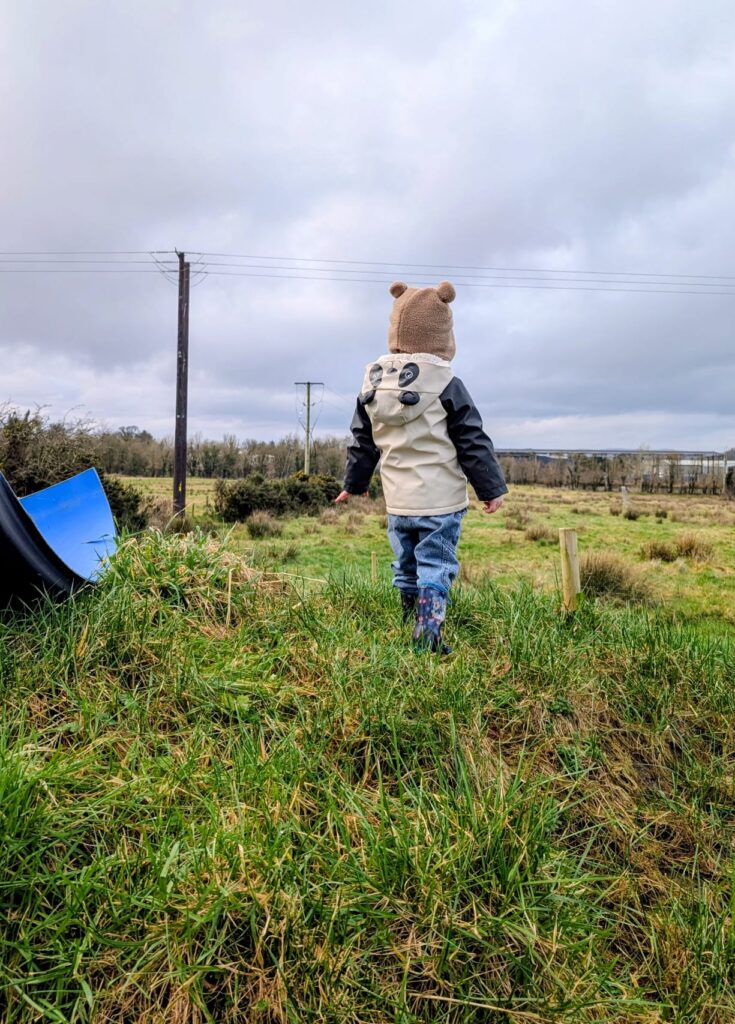
Becoming Someone
A Conditions Lens Conceptual Reflection on Childhood, Identity and the Formation of Self
This is the central website version of this Conditions Lens™ piece.
Written by: Thomas Mountney, MA Early Childhood Studies
Role: Early Childhood Specialist
Part of: The Conditions Lens™ body of work
First published: 18 May 2026
Reading time: Approximately 35 minutes
Reading support
This is a long-form reflective piece. For readers who use AI tools for reading support, audio support, summary or reflection, an optional copy-and-paste prompt is included at the bottom of the page.
The prompt is designed to help the article be read carefully as part of the wider Conditions Lens™ body of work, without losing its emotional, ethical or ecological depth.
The prompt is provided to support careful reading, reflection and accessibility. It does not grant permission to reproduce, adapt or republish the article without attribution or consent.
Summary
This piece explores identity formation through the Conditions Lens™. It asks how children come to understand who they are through the meanings adults place around them, the roles they are offered, the digital spaces they enter, and the experiences that repeatedly tell them, “this is who you are.” It considers how belonging, attention, agency, interpretation and modern digital feedback loops can shape the self over time.
Author note
Developed through interdisciplinary observation across early childhood development, identity formation, relationships, digital environments, social belonging, agency and lived experience.
Copyright
© Thomas Mountney, 2026. This piece forms part of The Conditions Lens™, a developing body of work and framework by Thomas Mountney. All rights reserved.
This paper is a practice-informed conceptual reflection. It draws on sustained observation, early childhood knowledge and analysis of changing social, relational and digital conditions to develop the Conditions Lens as a way of understanding how children form identity within the environments surrounding them.
Table of Contents
1. Introduction: Identity Does Not Form in Isolation
2. The Core Idea: Becoming Someone
3. Foundational Human Variation
4. Identity as a Developmental Process
5. Adult Interpretation as a Condition
5.1 Adult Instruction, Modelling and Identity Categories
6. The Conditions Shaping Identity
7. The Body, Belonging and the Self
8. Digital Amplification and Identity Formation
8.1 The Social Conditions Inside Online Gaming
8.2 The Social Conditions Inside Social Media
8.3 Attention, Performance and Identity
9. Holding Both Truths
10. Conditions That Support Healthy Identity Formation
11. Closing Reflection
12. References
1. Introduction: Identity Does Not Form in Isolation
Identity does not form in isolation.
A child’s sense of self emerges over time through the ongoing interaction between biology, body, temperament, relationships, belonging, culture, language, environment, and the repeated conditions surrounding them.
Children come into the world with bodies, nervous systems, temperaments, sensitivities, biological realities, and individual ways of experiencing life. However, they also grow within families, early childhood settings, schools, peer groups, communities, cultures, and increasingly digital environments that continuously reflect back ideas about who they are, who they should be, where they belong, and how they are seen.
In this sense, identity formation is not simply an internal process. It is also relational, embodied, social, cultural, and environmental.
The purpose of this paper is not to argue over identity, but to examine how identity itself is being shaped through the conditions surrounding children. It asks a Conditions Lens question:
What conditions are shaping how children come to understand, express, question, and stabilise their sense of self?
This question matters because childhood and adolescence are periods of becoming, during which identity develops through time, relationship, exploration and social experience (Erikson, 1968). Children are not finished selves. They are developing, testing, observing, adapting, belonging, resisting, copying, questioning, and making meaning from the world around them.
At different stages, children may explore identity through play, clothing, friendships, interests, language, roles, groups, appearance, beliefs, abilities, gender, culture, family belonging, online spaces, and peer recognition. These explorations are not always fixed conclusions. Often, they are part of the wider developmental process through which children begin to understand who they are in relation to others.
The Conditions Lens does not ask adults to ignore identity. It asks them to slow down around it.
A child’s identity should not be dismissed, but neither should it be rushed. Children need time, safety, relationships, privacy, embodiment, belonging, and trusted adults around them as they become themselves.
The question is not simply:
Who is this child?
The deeper question is:
What conditions are shaping how this child is becoming someone?
This paper is offered as a reflective conceptual contribution rather than a clinical or diagnostic model. It does not claim to provide final answers about identity formation. Instead, it offers a way of noticing the conditions through which children come to experience belonging, embodiment, visibility, pressure, safety and self-understanding.
The contribution of the Conditions Lens is not to replace existing theories of identity, development, belonging or digital childhood. Rather, it offers a practical way of bringing these areas together by asking what conditions are shaping the child’s becoming in a given moment, relationship or environment. It shifts attention from surface expression alone toward the wider pattern of pressure, safety, visibility, modelling, belonging, embodiment and time surrounding the child.
2. The Core Idea: Becoming Someone
A child is not simply born as a finished self.
Nor are they simply shaped passively by the world around them.
They become someone through the ongoing interaction between who they are, how they are received, and the conditions surrounding them over time.
Within the Conditions Lens, identity is understood as a developmental process. It is shaped through the relationship between inner experience and outer conditions. A child brings their own body, biology, temperament, sensitivities, preferences, emotional needs, family history, neurodevelopment and ways of experiencing the world. However, the child also develops within environments that continuously communicate messages about belonging, value, expectation, difference, acceptance and possibility (Bronfenbrenner, 1979).
Identity is therefore not reducible to one cause.
For some children, aspects of identity may be deeply rooted in biology, body, temperament, neurodevelopment or early hormonal influences. For others, identity may be shaped more visibly through relationships, culture, language, belonging, experience or social conditions. In all cases, the child’s sense of self develops through an ongoing interaction between inner experience and the world around them.
Biology may strongly shape the child’s inner experience, but conditions shape how that experience is understood, expressed and responded to.
This matters because children do not form identity in neutral environments. They are constantly receiving messages from the world around them. These messages may come through:
- family expectations,
- adult language,
- gender roles,
- peer groups,
- early childhood settings,
- school cultures,
- cultural beliefs,
- religious or community values,
- media,
- social media,
- algorithms,
- body image pressures,
- friendship groups,
- and experiences of acceptance, rejection, praise or shame.
Over time, these repeated messages can influence how a child begins to understand:
- who they are,
- where they belong,
- what makes them valued,
- what makes them different,
- what parts of themselves feel safe to express,
- and what parts they feel pressure to hide.
The Conditions Lens does not suggest that identity is simply given to the child by adults, peers or culture. Children are active participants in their own becoming. They interpret, resist, absorb, test, reject, copy, question and reshape the meanings offered to them.
However, children do this within conditions.
A child who is given time, safety, emotional connection and freedom to explore may develop a more grounded sense of self. A child surrounded by shame, pressure, rigid expectations, adult anxiety, peer comparison or constant digital visibility may experience identity formation very differently.
The central concern is not that children explore identity. Exploration is part of becoming.
The concern is whether the conditions surrounding identity formation allow children to develop with enough time, safety, privacy, embodiment, belonging and relational support to understand themselves without being rushed, shamed, over-labelled or pulled into adult conflict.
The Conditions Lens therefore asks:
What conditions help children become themselves safely?
And also:
What conditions may distort, pressure, confuse, amplify or narrow the process of becoming someone?
3. Foundational Human Variation
Children do not enter identity formation as identical nervous systems.
Each child brings their own body, biology, temperament, sensory experience, emotional intensity, developmental pathway, family history, neurodevelopment, culture, and inner way of experiencing the world.
Within the Conditions Lens, these differences are not treated as problems to be corrected. They are understood as part of natural human variation.
This matters because the same conditions may affect different children in different ways. One child may move through questions of belonging, appearance, role, friendship, gender or self-expression with relative ease. Another child may experience similar conditions with greater intensity, uncertainty, anxiety, sensitivity or distress.
A child who is highly sensitive to social approval may be more affected by peer comparison or exclusion. A child who is strongly independent may resist imposed expectations. A child who is anxious or slow to warm may need more time before expressing parts of themselves openly. A child who is neurodivergent may experience belonging, sensory awareness, social expectation, body awareness or self-expression in ways that differ from other children.
The Conditions Lens therefore does not begin by asking:
What category does this child belong to?
It asks:
How does this child experience the conditions surrounding them?
This distinction matters. Identity formation should not be approached as though all children respond to the same environment, language, expectation or pressure in the same way. Children differ in how they process belonging, visibility, uncertainty, adult response, peer feedback and social meaning.
For some older children, language may help them name and communicate an inner experience. However, during childhood, particularly in the early and primary years, language should be used carefully. It should support understanding, dignity and communication, rather than rush the child into fixed meanings before they have had enough time, maturity, privacy and lived experience to understand themselves.
Language should support the conditions of becoming; it should not become a condition that rushes becoming.
Within the Conditions Lens, foundational human variation reminds us that children need different levels of time, reassurance, privacy, embodiment, guidance, space, relationship and support as they become themselves.
The goal is not to force all children through the same identity pathway.
The goal is to create conditions where each child can develop a grounded sense of self with dignity, safety and time. This means recognising that the same language, pressure, expectation or digital environment may not land the same way for every child.
4. Identity as a Developmental Process
Identity formation is not a single event. It is a developmental process.
Children do not arrive with a fully formed understanding of who they are. They gradually build a sense of self through repeated experiences of being seen, named, accepted, corrected, compared, included, excluded, praised, shamed, encouraged, limited and understood.
From early childhood, children begin forming ideas about themselves through everyday experiences. They notice what adults respond to. They learn what brings approval, what creates tension, what is celebrated, what is ignored, and what is discouraged. Over time, these repeated interactions begin shaping how the child understands their place in the world.
Children also form identity through observation of adult life. They learn not only from what adults say, but from what adults repeatedly do. A child who watches an adult garden, repair, cook, build, care for animals, tend land, comfort others, manage frustration, or contribute to family and community is receiving powerful messages about what it means to be a person. Through these repeated observations, children begin to form ideas about care, strength, responsibility, gender, belonging, competence and value.
This connects closely with the wider Conditions Lens argument that the conditions shaping adults also become conditions shaping children. When adults are living within environments of exhaustion, digital interruption, economic pressure, fragmented attention, and reduced community connection, children may experience not only reduced adult availability, but also fewer opportunities to observe meaningful adult participation in embodied, relational, and communal life.
For example, a child who observes a father or a male caregiver engaging in physical work while also showing kindness, patience and care may come to understand masculinity not as hardness or dominance, but as strength connected with compassion. In this way, identity is shaped not only through direct instruction, but through lived models of adulthood.
In many modern conditions, however, adult life may become increasingly hidden, fragmented, digital, rushed or separated from children’s everyday experience. Work may happen elsewhere, on screens, under stress, or beyond the child’s view. Care may be present but exhausted. Community participation may reduce. Practical skills, land-based activity, repair, craft, caregiving and embodied contribution may become less visible. As a result, children may receive fewer grounded models of what adulthood, care, competence, femininity, masculinity, responsibility and belonging can look like in real life.
This may be particularly important when considering the diversity of adult models available to children. In many early childhood and primary education settings, children are often more likely to be cared for and taught by women than by men. This does not reduce the value of women’s care, teaching or professional presence. Rather, it raises a wider Conditions Lens question about whether children have enough opportunities to observe diverse, grounded models of adulthood, including men who are nurturing, emotionally present, responsible, practical, gentle, protective and caring. When children have limited exposure to varied adult models, their understanding of care, strength, responsibility, femininity, masculinity and belonging may be shaped by a narrower range of visible examples.
Through these repeated experiences of being seen, guided, included, modelled to, and responded to, children begin forming deeper questions about who they are and where they belong.
A child may begin to ask, often without words:
Am I safe?
Am I accepted?
Where do I belong?
What am I good at?
What makes me different?
What parts of me are welcomed?
What parts of me should I hide?
As children grow, identity becomes increasingly connected to relationships, peer groups, appearance, abilities, interests, culture, gender, family, community, digital spaces and the need for belonging. Childhood and adolescence therefore involve ongoing exploration. Children may try on roles, styles, interests, friendships, ideas, labels and ways of presenting themselves as they attempt to understand who they are and where they fit.
Within the Conditions Lens, this exploration is not viewed as a problem. Exploration is part of becoming. The concern is not that children question, experiment, change or search for meaning. The concern is whether the conditions surrounding that exploration provide enough safety, time, privacy, embodiment and relational support for the child to develop a grounded sense of self.
Identity formation can be supported when children experience conditions of:
- emotional safety,
- stable relationships,
- freedom to explore,
- freedom from shame,
- realistic boundaries,
- embodied experience,
- trusted adult presence,
- meaningful belonging,
- and time to mature.
However, identity formation may become more pressured when children are surrounded by conditions of:
- adult anxiety,
- rigid expectations,
- social comparison,
- peer rejection,
- shame,
- over-labelling,
- online visibility,
- algorithmic reinforcement,
- constant performance,
- or pressure to reach certainty too quickly.
The Conditions Lens therefore understands identity as something that unfolds through interaction. Children are not passive recipients of identity. They are active meaning-makers. However, the meanings available to them, and the emotional safety surrounding those meanings, are shaped by the conditions around them.
A child needs room to become.
They need adults who can listen without panic, guide without control, support without rushing, and remain present without turning the child’s developing identity into an adult battleground.
In this sense, healthy identity formation is not about forcing certainty. It is about creating the conditions in which a child can gradually understand themselves with safety, dignity, connection and time.
5. Adult Interpretation as a Condition
Adults play a powerful role in how children come to understand themselves. Through language, expectation, reassurance, correction, concern, praise, silence, discomfort and interpretation, adults can shape which parts of the child feel visible, acceptable, confusing, shameful or fixed.
This influence is not limited to one worldview. Adults may shape children through traditional expectations, such as rigid ideas about how boys or girls should behave. However, adults may also shape children through more contemporary identity frameworks when exploration, preference, discomfort or non-conformity is interpreted too quickly as evidence of a fixed identity.
Within the Conditions Lens, the concern is not that adults discuss identity. Children need trusted adults who can listen, support and respond with care. The concern is when adult interpretation becomes too forceful, too anxious, too certain, or too shaped by adult assumptions. In those conditions, the child may feel pressure either to reject parts of themselves or to adopt meanings before they have had enough time, maturity and lived experience to understand them.
A child who enjoys clothing, play, interests or roles not traditionally associated with their sex should not be shamed or restricted. Equally, those expressions should not automatically be treated as proof of a fixed identity. Children need room to explore without adults turning every expression into a conclusion, particularly given the complexity and variation within children’s gender development (Benjamin and Irwin, 2022). Adult certainty, from any direction, can become a condition shaping the child.
5.1 Adult Instruction, Modelling and Identity Categories
Within early childhood, adults do not only shape identity through what they say. They shape identity through what they repeatedly model.
Children learn how to treat others by observing how adults treat others. They notice whether adults are kind, dismissive, anxious, respectful, uncomfortable, warm, fearful, curious or judgmental. In this sense, respect is not only taught through direct instruction. It is absorbed through the relational conditions adults create.
A child does not need every human difference to become an adult-led lesson in order to learn kindness. They need to live within conditions where kindness is ordinary.
This distinction matters when considering identity, gender and difference in early childhood. Children should grow within environments where people are treated with dignity and where bullying, cruelty, exclusion or shame are not accepted. However, the Conditions Lens asks whether introducing complex identity categories too early, too directly, or too abstractly may sometimes shift children away from embodied social learning and toward adult-framed concepts before they have the developmental maturity to process them.
For example, adults may sometimes use stories, resources or planned activities to introduce children to different forms of identity, family life or human difference. These may be intended to promote inclusion and respect. The Conditions Lens does not reject this intention, but asks a developmental question: are these ideas being introduced in a way that supports the child’s understanding, or are complex adult-framed concepts being introduced before children have had enough time, lived experience and developmental grounding to make sense of them?
This concern does not mean children should be taught disrespect. It means the opposite. Respect should be modelled as a baseline condition of human interaction, not made dependent on the child fully understanding every adult category or explanation. In this sense, inclusion is not removed; it is grounded first in lived dignity, kindness and relational modelling.
The same principle applies across human difference. Adults do not need to teach a child, “Be kind to this person because they belong to this category.” Adults can instead create conditions where the child sees that kindness, dignity and respect are how we treat people.
Within the Conditions Lens, adult modelling may often be more developmentally appropriate than abstract adult-led instruction around complex identity categories. The adult’s role is not to make children anxious about categories, nor to teach them to sort people through identity labels. The adult’s role is to model dignity, fairness, warmth and respect so consistently that children experience these as normal conditions of human life.
A child should learn:
People are different.
People deserve kindness.
Nobody should be mocked, excluded or shamed.
You do not need to fully understand someone to treat them with dignity.
Children do not need every difference turned into a lesson. They need to grow within conditions where dignity is modelled, kindness is ordinary, and respect is not dependent on explanation.
6. The Conditions Shaping Identity
Within the Conditions Lens, identity formation is shaped through repeated interaction with the conditions surrounding the child.
These conditions may be emotional, relational, social, cultural, sensory, physical, ecological, educational and digital. They do not operate separately. They overlap, reinforce one another, and change over time.
A child’s sense of self may be shaped by conditions such as:
- the emotional climate of the home,
- the availability of trusted adults,
- family expectations,
- cultural beliefs,
- peer belonging,
- school routines,
- gender roles,
- body image pressures,
- opportunities for play,
- opportunities for responsibility,
- exposure to nature and embodied experience,
- digital environments,
- social comparison,
- and experiences of acceptance, shame, exclusion or recognition.
These conditions do not simply tell the child what to think. They shape what feels safe, possible, valued, visible or hidden.
A child who grows within conditions of emotional safety may feel more able to explore, question and express themselves. A child who grows within conditions of shame or ridicule may learn to hide parts of themselves. A child who experiences meaningful belonging may develop a stronger sense of security. A child who experiences repeated exclusion may begin searching more urgently for identity, recognition or acceptance elsewhere.
This does not mean children are passively shaped by their environments. Children interpret, resist, adapt and make meaning. However, the conditions surrounding them influence the meanings available to them and the emotional weight those meanings carry.
In childhood, identity is shaped not only by what children are told, but by what they repeatedly experience.
If a child repeatedly experiences care, they may come to see themselves as worthy of care.
If a child repeatedly experiences shame, they may come to see parts of themselves as unacceptable.
If a child repeatedly experiences pressure, they may begin to associate identity with performance.
If a child repeatedly experiences dignity, they may learn that human worth does not depend on fitting neatly into a category.
The Conditions Lens therefore asks adults to look beyond the surface expression of identity and consider the wider ecosystem around the child: what is being modelled, rewarded, shamed, rushed, hidden, amplified, made safe, or made difficult to say.
Identity formation does not happen in one moment, one conversation, one lesson or one online interaction. It develops through repeated patterns of experience over time.
The child becomes someone within those patterns.
7. The Body, Belonging and the Self
Identity is not formed only through thought. It is also formed through the body.
Children come to know themselves through movement, sensation, appearance, ability, comfort, discomfort, strength, vulnerability, touch, growth, puberty, health, difference and the way others respond to their bodies.
The body is often one of the first places where identity becomes felt. A child may experience confidence, discomfort, pride, shame, strength, awkwardness, comparison or uncertainty through their body long before they can fully explain those feelings in words.
This matters because children do not experience their bodies in isolation. They experience their bodies within relationships, cultures and environments that reflect meaning back to them.
A child may learn:
My body is safe.
My body is wrong.
My body is strong.
My body is watched.
My body is compared.
My body is accepted.
My body makes me different.
My body helps me belong.
These meanings can be shaped by family comments, peer reactions, clothing expectations, gender roles, body image pressures, disability, illness, puberty, sport, movement, online comparison, cultural norms and experiences of acceptance or shame.
This may be visible in different ways for different children. Many girls may encounter body-related expectations from an early age, including messages around appearance, clothing, prettiness, weight, comparison and social approval. Many boys may encounter different but equally powerful expectations, including messages that they should be tough, emotionally controlled, physically capable, dominant, or that they should not cry or show vulnerability. From a Conditions Lens perspective, these are not simply individual confidence issues. They are repeated conditions through which children learn what parts of themselves are welcomed, valued, hidden or performed.
Children may also be shaped by the repeated meanings adults attach to them. Comments about weight, appearance, sensitivity, jealousy, ability, behaviour or personality may seem small to adults, but they can become powerful conditions in a child’s developing sense of self. A child repeatedly told they are “jealous,” “dramatic,” “too sensitive,” “bold,” “big,” “shy” or “difficult” may begin to experience those descriptions as part of who they are, even when they do not reflect the child’s inner experience.
What names, meanings or assumptions are being placed onto the child?
Are these helping the child understand themselves, or are they becoming identities the child has to carry?
What might the child believe about themselves if they hear this message repeatedly over time?
Children are not only shaped by what happens to them. They are also shaped by what is repeatedly said about them. A child should not have to perform a body, suppress an emotion, or fit a role before they have had the chance to inhabit themselves with dignity.
Within the Conditions Lens, the body is not treated as separate from identity. It is one of the primary places where identity is experienced, questioned, protected, hidden, expressed and shaped.
Belonging is equally important. The need to belong has been described as a fundamental human motivation, shaping how people seek acceptance, connection and relational security (Baumeister and Leary, 1995).
Children are deeply relational. They do not only ask, “Who am I?” They also ask, “Where do I belong?” A child’s sense of self is shaped by whether they feel accepted within their family, peer group, classroom, community, culture and wider environment.
When belonging is secure, children may have more freedom to explore who they are without panic. When belonging is fragile, identity may become more pressured. The child may begin searching for a place, label, group or role that offers recognition, safety or meaning.
This is not necessarily negative. Belonging is a human need. Communities, friendships and shared identities can offer comfort, language, recognition and support. However, when belonging is tied too strongly to performance, labels, appearance, online approval or fixed certainty, children may feel pressure to become recognisable before they have had enough time to become grounded.
The Conditions Lens therefore understands identity as both embodied and relational.
A child is becoming someone through:
- how they experience their body,
- how others respond to their body,
- where they feel accepted,
- where they feel rejected,
- what groups offer belonging,
- what roles feel available,
- what forms of expression feel safe,
- and what parts of themselves feel difficult to show.
This is especially important in modern childhood, where body image, gender roles, self-presentation, online visibility and social comparison may begin shaping self-understanding earlier and more intensely than before.
Children need conditions where their body is not treated as a problem to fix, a performance to perfect, or an object for constant comparison.
They need conditions where the body can be lived in, moved through, cared for, respected, strengthened, rested and understood.
They also need belonging that does not require them to abandon parts of themselves, perform certainty, or fit too quickly into adult categories.
Healthy identity formation requires both:
a body that can be inhabited with dignity,
and
a place where the child can belong without losing themselves.
8. Digital Amplification and Identity Formation
Digital environments have become part of the conditions through which many children and young people come to understand themselves.
The issue is not simply that children encounter ideas online. Children have always encountered ideas through families, communities, peers, books, television, music, fashion and culture. What is different within many digital environments is the speed, intensity, repetition, competitiveness and visibility with which experiences can be presented, reinforced and socially rewarded (Turkle, 2011; Twenge, 2017; Haidt, 2024).
Within digital environments, children may encounter identity labels, social comparison, body image pressures, peer visibility, online communities, curated lives, influencers, competitive gaming, rankings, daily rewards, algorithmic recommendations, approval metrics, conflict, belonging and repeated messages about who they might be, who they should become, or how they compare to others.
These environments can be enjoyable, creative and socially meaningful. For some children, digital spaces may offer connection, recognition, skill development, teamwork, imagination, play and belonging.
However, the Conditions Lens also asks what happens when children spend increasing time within environments designed around speed, reward, comparison, competition, visibility and continuous engagement.
A child may not simply play a game. They may enter a system of goals, levels, rankings, rewards, penalties, losses, countdowns, upgrades and social comparison. Daily log-in rewards may create pressure to return. Competitive systems may intensify frustration, urgency, status-seeking or fear of falling behind. Online games may also connect identity with performance: being good, being fast, having the right skin, winning, ranking higher, keeping up with peers, or not letting the team down.
In these conditions, the child may begin to experience digital environments not only as entertainment, but as spaces where competence, status, belonging and self-worth are repeatedly tested.
This does not mean digital environments create identity from nothing. However, they may amplify certain feelings, behaviours and self-understandings at a time when the child’s sense of self is still developing.
A child who repeatedly experiences frustration, failure, competition or comparison online may begin to carry those emotional states into the wider day. A child who receives recognition through digital achievement may begin to associate worth with performance. A child who is excluded from online play, lacks certain digital possessions, or cannot keep up with peers may experience belonging as conditional.
The same applies to social media and identity-based content. Children and young people may encounter labels, communities, stories, aesthetics, influencers, body ideals, peer feedback and algorithmic reinforcement. These may offer recognition and language for some, but they may also intensify comparison, confusion, pressure, visibility or premature certainty for others.
From a Conditions Lens perspective, the concern is not only what children see online, but what repeated digital systems train them to expect.
Do they expect constant reward?
Do they expect instant feedback?
Do they expect comparison?
Do they expect status?
Do they expect stimulation?
Do they expect visibility?
Do they expect belonging to depend on performance?
In previous generations, identity exploration often unfolded more slowly through embodied life, local peer groups, music, clothing, hobbies, family roles, community, subcultures, practical responsibility and lived experience. Today, identity exploration may also happen within digital spaces shaped around feedback, comparison, engagement, visibility and return, where belonging can appear tied to labels, performance, possessions, metrics or online recognition.
The Conditions Lens therefore asks what is being rewarded, compared, amplified, made visible, linked to belonging, or tied to status. It also asks whether the child is being given room to explore privately, or whether digital systems are pulling identity into visible performance too quickly.
The concern is not that children should be cut off from all digital spaces or protected from all challenge, competition or ideas. Children’s digital lives involve both opportunities and risks, and these need to be understood in context rather than treated as one single condition (Livingstone and Stoilova, 2021). Challenge and play can be valuable. The concern is whether digital conditions provide enough balance, recovery, embodiment, privacy, adult presence, critical distance and real-world belonging.
Digital environments can offer recognition, reward and connection, but children and young people also need opportunities to step away from identity performance and return to real relationships, real bodies, real responsibilities, real communities, real play, real rest and real belonging. They need forms of recognition that do not depend on visibility, labels, rankings, metrics, possessions or performance.
Within the Conditions Lens, digital amplification becomes a concern when it accelerates stimulation, comparison, competition or identity formation faster than the child’s lived experience, maturity, relationships and embodied understanding can support.
The question is not simply:
What is the child doing online?
The deeper question is:
What digital conditions are repeatedly shaping how this child understands themselves, regulates themselves, and experiences belonging?
Digital environments can also expand the scale on which children experience belonging, comparison and relevance. In earlier forms of childhood, a child’s sense of competence, popularity, role or recognition was often shaped within smaller relational circles such as family, school, neighbourhood, clubs, community and local peer groups. In many digital environments, however, children may now encounter global systems of comparison. Social media can intensify comparison around appearance, lifestyle, popularity, attractiveness, visibility, body image and social approval. Online gaming can intensify comparison around skill, ranking, speed, competitiveness, status, rewards, team role, availability and performance. As a result, children may not only ask whether they belong locally, but whether they are good enough, visible enough, skilled enough, attractive enough or relevant enough within a much larger digital world.
8.1 The Social Conditions Inside Online Gaming
Online games are not only technological spaces. For many children and young people, they are also social environments.
Within these environments, children may experience belonging, teamwork, loyalty, responsibility, competition, status, achievement, frustration and recognition. This is particularly important when games involve teams, missions, rankings, live events, daily rewards, group chats or shared goals.
From an adult perspective, a child playing an online game may appear to be “just gaming.” However, from the child’s perspective, the game may also be a place where they have a role, a team, a mission, a friendship group, a status position or a shared commitment.
A child may become angry when a parent suddenly stops them going online, particularly if they had already arranged to meet friends within a game. From the adult’s perspective, this may appear to be attitude, defiance or overdependence on gaming. However, from the child’s perspective, the situation may carry a very different meaning.
They may feel that they are letting down a team, missing a mission, breaking a promise, losing status, falling behind, missing a reward, being excluded, or losing their role within a shared digital world.
In this sense, the digital environment is not only providing entertainment. It is creating social conditions of belonging, loyalty, responsibility, comparison, competition and expectation.
The behaviour may look like anger, but the condition underneath may be disrupted belonging.
This does not mean the child should be allowed online whenever they want. Boundaries still matter. Family life, rest, sleep, outdoor experience, responsibilities and real-world relationships must remain important conditions in the child’s life.
However, understanding the social condition changes how the adult interprets the behaviour.
Instead of seeing only defiance, the adult can recognise that the child may be responding to a disrupted social commitment, a loss of status, a fear of exclusion, or a feeling that they are letting others down.
This does not offer a universal solution, but it shows how understanding the condition can change the adult response. An adult might still hold the boundary, but support the child to manage the social meaning of that boundary.
For example, rather than seeing only attitude, an adult might recognise:
“This is not only about the game. This is about the child feeling that they are letting their group down.”
Within the Conditions Lens, this distinction matters. The aim is not to remove all digital belonging, but to help children understand that belonging cannot depend only on digital availability, performance or constant presence.
Children need help learning that they can belong to a group without being constantly available to it, that real friendship can tolerate absence, and that family boundaries, rest and embodied life still matter. They also need adults who can see beyond the surface behaviour and ask:
What social condition has just been disrupted for this child?
The question is not simply whether a child is gaming, but what conditions the game creates around the child. A group of children laughing over Mario Kart in the same room is not the same developmental condition as a child alone in a bedroom trying to maintain status, rewards, rankings and online availability within a competitive digital system.
A shared game played in the same room with friends or family may involve humour, turn-taking, face-to-face interaction, shared laughter and natural stopping points. This is very different from isolated or highly competitive online gaming shaped by rankings, rewards, pressure, status, team dependency and constant availability. Within the Conditions Lens, the concern is therefore not gaming as a single category, but the particular conditions of attention, regulation, belonging and behaviour that different forms of gaming create.
8.2 The Social Conditions Inside Social Media
Social media is not only a communication tool. For many children and young people, it can become a social environment where identity, belonging, appearance, popularity and self-worth are repeatedly reflected back through visibility and response.
This may be particularly visible for many girls, although it is not limited to girls. Many children and young people may experience social media as a space where they are constantly observing others and being observed themselves.
Within these environments, children may encounter appearance comparison, body image pressure, popularity metrics, likes, comments, messages, group chats, online silence, exclusion, curated lives, filters, trends, influencers, social performance and pressure to remain visible.
From an adult perspective, a child scrolling, posting, checking messages or becoming upset after looking at their phone may appear distracted, dramatic, moody or overly sensitive. However, from the child’s perspective, the digital interaction may carry a deeper social meaning. They may feel excluded, unattractive, less popular, irrelevant, invisible, judged, ignored, left behind, or under pressure to respond quickly, stay visible, and present themselves in ways that keep them accepted.
In this sense, social media is not only exposing the child to content. It may be creating social conditions of comparison, performance, approval, exclusion, visibility and belonging.
The behaviour may look like moodiness, withdrawal, anxiety or overreaction, but the condition underneath may be threatened belonging or social comparison.
This does not mean all social media use is harmful, or that every child experiences it in the same way. Digital spaces can offer connection, humour, creativity, friendship and support. However, the Conditions Lens asks whether the child has enough real-world belonging, privacy, embodied confidence and trusted adult support to prevent online visibility from becoming central to their sense of worth.
As with gaming, understanding the condition changes how the adult interprets the behaviour.
Instead of seeing only drama or attitude, the adult can ask what social meaning the interaction carried for the child, whether it involved exclusion, comparison, embarrassment or pressure, and what real-world conditions might restore belonging, confidence and emotional safety.
Children need help learning that their worth is not measured by visibility.
They need to know that being left out online does not make them less valuable.
They need to experience belonging that is not dependent on appearance, performance, response time, likes, streaks or social approval.
Within the Conditions Lens, the aim is not simply to remove social media or deny its role in modern childhood. The aim is to understand what social conditions it is creating around the child.
The question is not only:
What is the child doing online?
The deeper question is:
What is the online environment teaching this child about who they are, where they belong, and what makes them valuable?
8.3 Attention, Performance and Identity
Attention is one of the most powerful conditions shaping identity. Children and young people do not seek attention only in a negative sense; attention is often connected to deeper needs for recognition, belonging, safety, reassurance, affection, status, or proof that they matter.
A child who feels lonely, vulnerable, unseen or disconnected may become especially sensitive to the forms of attention available around them. If a behaviour, label, style, role, online persona or expression receives a strong response, that response may begin to shape what the child repeats.
In digital environments, this can become intensified. A child or young person may discover that presenting themselves in a particular way brings comments, concern, likes, laughter, shock, sympathy, belonging or visibility. What begins as exploration, humour, distress, imitation or experimentation may then become reinforced through repeated attention.
Over time, attention can condition behaviour.
Behaviour can become performance.
And performance can begin to feel like identity.
This does not mean the original expression was fake or meaningless. It means the conditions surrounding the expression matter. When a child receives repeated attention for a particular presentation of self, that presentation may become emotionally charged. It may become connected to belonging, recognition or value.
For example, a young person who adopts an unusual online identity, role or persona may initially do so through play, curiosity, humour, distress, peer influence or experimentation. However, if that expression receives significant attention, the young person may feel encouraged to continue, intensify or defend it. The identity may become less about the original moment and more about the recognition, belonging or relevance that followed.
From a Conditions Lens perspective, the concern is not that children explore unusual ideas, roles or identities. Exploration has always been part of childhood and adolescence. The concern is when digital attention systems reward performance before the child has had enough time, privacy, maturity and grounded belonging to understand what they are expressing.
This is especially important because digital environments often make attention measurable. Views, likes, comments, shares, responses, streaks and follower counts can turn visibility into a form of feedback. The child may begin to ask, consciously or unconsciously, what gets them noticed, accepted, responded to, valued, or kept relevant. In these conditions, identity may become increasingly tied to performance.
The child may not simply be asking:
Who am I?
They may also be asking:
Who do I need to be to be seen?
This does not mean adults should shame the child or accuse them of pretending. Shame would only deepen the need for defensive identity and external validation. Instead, adults need to look beneath the performance and ask whether the child feels seen in ordinary life, where they experience belonging offline, what kind of attention the behaviour receives, and what conditions would help them feel valued without needing to perform.
Within the Conditions Lens, attention is not dismissed as superficial. It is understood as a developmental condition.
Children need attention that is steady, relational and grounded.
They need to feel noticed when they are ordinary, not only when they are distressed, dramatic, exceptional, unusual or performing.
They need adults who can offer connection before performance becomes the pathway to connection.
A child who feels seen without needing to perform may have less need to build identity around what gets attention.
9. Holding Both Truths
The Conditions Lens can hold more than one truth at the same time.
It can recognise that some children may experience deep, persistent and meaningful questions around body, gender, belonging or identity. These experiences should not be dismissed, mocked or shamed. A child who is struggling with their sense of self needs safety, compassion, patience and trusted adults who can listen carefully.
At the same time, the Conditions Lens can also recognise that childhood and adolescence are periods of development, exploration and becoming. Not every question, discomfort, preference, style, role, interest or form of non-conformity should be rushed into a fixed conclusion.
Both truths matter.
A child’s inner experience should be taken seriously.
And a child’s developmental process should be given time.
A child should not be forced to fit rigid expectations of how boys or girls should behave. A boy who is gentle, sensitive, artistic or emotionally expressive should not be shamed. A girl who is strong, physical, assertive or uninterested in traditional expectations of femininity should not be corrected into narrow roles.
At the same time, children should not have every preference, discomfort, expression or exploration interpreted too quickly as evidence of a fixed identity. Childhood needs room for uncertainty, play, imitation, experimentation, contradiction and change.
The Conditions Lens therefore does not ask adults to choose between dismissal and certainty.
It asks adults to create conditions where children can be listened to without being rushed, supported without being over-labelled, and guided without being controlled.
This is especially important in a world where identity has become increasingly visible, politicised, digitalised and emotionally charged. Adults may feel pressure to respond quickly, take a position, affirm immediately, reject immediately, explain immediately, or protect the child from one perceived danger while unintentionally creating another.
But children do not need adult panic.
They need adult steadiness.
They need adults who can say:
I hear you.
I am not afraid of you.
I will not shame you.
I will not rush you.
I will stay with you as you work out who you are.
Within the Conditions Lens, healthy identity formation requires both openness and caution.
Openness protects the child from shame.
Caution protects the child from premature certainty.
Compassion protects the child from isolation.
Time protects the child’s becoming.
The aim is not to deny identity.
The aim is not to impose identity.
The aim is not to rush identity.
The aim is to create the conditions in which identity can unfold with dignity, safety, relationship, embodiment and time.
A child should be allowed to become someone without being forced into someone else’s fear, expectation, interpretation, or certainty.
10. Conditions That Support Healthy Identity Formation
If identity develops through conditions, then adults have an important role in shaping the environments within which children become themselves.
This does not mean controlling who children become. It means creating conditions that allow children to develop a grounded sense of self with safety, dignity, relationship and time.
Healthy identity formation may be supported by conditions such as:
- emotional safety,
- trusted adult presence,
- freedom from shame,
- time to mature,
- privacy,
- embodied experience,
- real-world belonging,
- stable relationships,
- meaningful responsibility,
- freedom to explore,
- respectful boundaries,
- adult modelling,
- reduced performance pressure,
- and opportunities to experience difference through lived respect rather than constant adult explanation.
Modelling is central to these conditions. Children learn identity, belonging, care, strength, respect and responsibility not only through instruction, but through watching how adults live. When adults model kindness, emotional steadiness, practical competence, respect for difference, care for the body, responsibility, repair, patience and dignity, children receive powerful messages about what it means to be a person.
The adult’s life becomes part of the child’s conditions for becoming.
Children need adults who can listen without panic, model dignity before explaining categories, notice distress without rushing to define it, support exploration without turning every expression into a conclusion, and hold boundaries without dismissing the child’s feelings. They also need adults who can recognise when digital environments are amplifying pressure, comparison, competition, visibility or belonging needs, and who can help them return to embodied life: movement, play, rest, nature, creativity, family, responsibility, friendship, practical work and real-world connection.
Within the Conditions Lens, supporting identity formation is not about removing all uncertainty from childhood. Uncertainty is part of becoming. Children may question, test, change, imitate, resist, copy, explore and contradict themselves as they develop.
The role of the adult is not to eliminate this process, but to keep the conditions around it safe enough for the child to move through it.
This means creating homes, early childhood settings, schools and communities where children experience:
Dignity without performance.
Belonging without pressure.
Difference without shame.
Modelling before instruction.
Guidance without control.
Language without rushing.
Exploration without over-labelling.
Boundaries without rejection.
Identity without adult panic.
A child who feels safe does not need to hide as much.
A child who feels valued does not need to perform as much.
A child who feels connected does not need to search as desperately for belonging.
A child who is allowed time does not need to become certain before they are ready.
This does not mean every difficulty disappears. Identity formation can still be complex, emotional and uncertain. Some children may need deeper support, specialist guidance or careful assessment. But the conditions surrounding the child still matter.
Before asking children to explain exactly who they are, adults might first ask:
Do they feel safe?
Do they feel known?
Do they feel rushed?
Do they feel seen beyond labels?
Do they have places to belong offline?
Do they have adults who model dignity and steadiness?
Do they have time to become?
Healthy identity formation is not created through pressure, panic or performance.
It is supported through conditions of safety, dignity, modelling, embodiment, belonging, relationship and time.
11. Closing Reflection
A child does not become someone in isolation.
They become someone through the ongoing interaction between body, biology, temperament, relationships, belonging, culture, language, environment and the repeated conditions surrounding them.
Within the Conditions Lens, identity is not treated as a simple answer to be found quickly, nor as a problem to be solved by adults. It is understood as a developmental process that unfolds through time, experience, relationship, embodiment and meaning-making.
This matters because modern children are becoming themselves within conditions that are increasingly complex. They are shaped not only by family, school, community and lived experience, but also by digital environments, online comparison, global visibility, performance pressure, adult interpretation, social media, gaming systems, identity language, peer belonging and attention economies.
The question is not whether children should be allowed to become themselves. They should.
The deeper question is whether the conditions surrounding them are helping them become themselves, or shaping them toward identities, performances, roles, labels or expectations that may not truly belong to them.
This matters because children can be shaped by shame, pressure, comparison, adult certainty, digital visibility, attention, rejection, belonging needs and repeated interpretation. In these conditions, a child may not simply be discovering who they are. They may also be adapting to what gains approval, avoids rejection, receives attention, secures belonging or satisfies adult expectation.
Children need adults who can listen without panic, guide without control, support without rushing, and see beyond surface expressions to the conditions shaping the child underneath.
A child who questions should not be shamed.
A child who explores should not be rushed.
A child who differs should not be corrected into narrow roles.
A child who performs should not be dismissed without first asking what need the performance may be meeting.
A child who is becoming someone needs room to become.
The Conditions Lens does not offer certainty where development requires patience. It does not ask adults to deny identity, impose identity, or rush identity. It asks adults to create the conditions in which identity can unfold with safety, relationship, dignity and time.
Because the question is not simply:
Who is this child becoming?
The deeper question is:
What conditions are helping this child become themselves?
The Conditions Lens is not asking adults to decide who the child is too quickly. It is asking adults to notice what is shaping the child’s becoming.
A child needs room to become themselves, not pressure to become the version of themselves that best fits the conditions around them.
This reflection is not intended as clinical, diagnostic or therapeutic guidance. Some children and young people may need specialist support, careful assessment or additional care. The purpose of this piece is to examine the wider conditions that may shape identity formation, belonging and the development of self in children and young people.
© Thomas Mountney, 2026. All rights reserved. This piece forms part of the Conditions Lens body of work. Please cite the author and source if quoting, referencing or adapting this work.
12. References
Baumeister, R.F. and Leary, M.R. (1995) ‘The need to belong: Desire for interpersonal attachments as a fundamental human motivation’, Psychological Bulletin, 117(3), pp. 497–529.
Benjamin, E.M. and Irwin, J.R. (2022) ‘Gender development in gender diverse children’, Annual Review of Developmental Psychology, 4, pp. 207–229. doi: 10.1146/annurev-devpsych-121020-034331.
Bronfenbrenner, U. (1979) The Ecology of Human Development: Experiments by Nature and Design. Cambridge, MA: Harvard University Press.
Erikson, E.H. (1968) Identity: Youth and Crisis. New York: W.W. Norton.
Haidt, J. (2024) The Anxious Generation. London: Allen Lane.
Livingstone, S. and Stoilova, M. (2021) The 4Cs: Classifying Online Risk to Children. Hamburg: Leibniz-Institut für Medienforschung | Hans-Bredow-Institut. Available at: https://www.ssoar.info/ssoar/handle/document/71817 (Accessed: 18 May 2026).
Turkle, S. (2011) Alone Together: Why We Expect More from Technology and Less from Each Other. New York: Basic Books.
Twenge, J.M. (2017) iGen: Why Today’s Super-Connected Kids Are Growing Up Less Rebellious, More Tolerant, Less Happy — and Completely Unprepared for Adulthood. New York: Atria Books.
Optional AI Reading Support Prompt
This prompt is provided for readers who use AI tools for reading support, audio support, summary or reflection.
It is not a replacement for the article itself. It is intended to help AI read the piece carefully as part of the wider Conditions Lens™ body of work, while preserving the emotional, ethical, ecological and practical depth of the writing.
Please read this article as one part of Thomas Mountney’s wider Conditions Lens™ body of work.
Use the article as the main source. Use the wider framework page only as a map to understand the broader Conditions Lens™ arc and how this article sits within it.
Do not flatten the work into behaviour management, parenting advice, screen-time concern, early years practice alone, environmentalism alone or general wellbeing content.
Read it for its emotional depth, ethical care, practical stewardship and central philosophy of creating conditions for continuity.
Please explain:
- What this article is saying in plain language
- What conditions it asks us to notice
- What existing knowledge it connects with or extends
- What this work is doing differently
- How this piece connects to the wider Conditions Lens™ web
- The emotional and ethical depth of the piece
- The possible ripple this idea may create
- One small piece of care or reflection I can hold today
Main article:
https://conditionslens.com/BecomingSomeone/
Wider framework:
https://conditionslens.com/start-here/