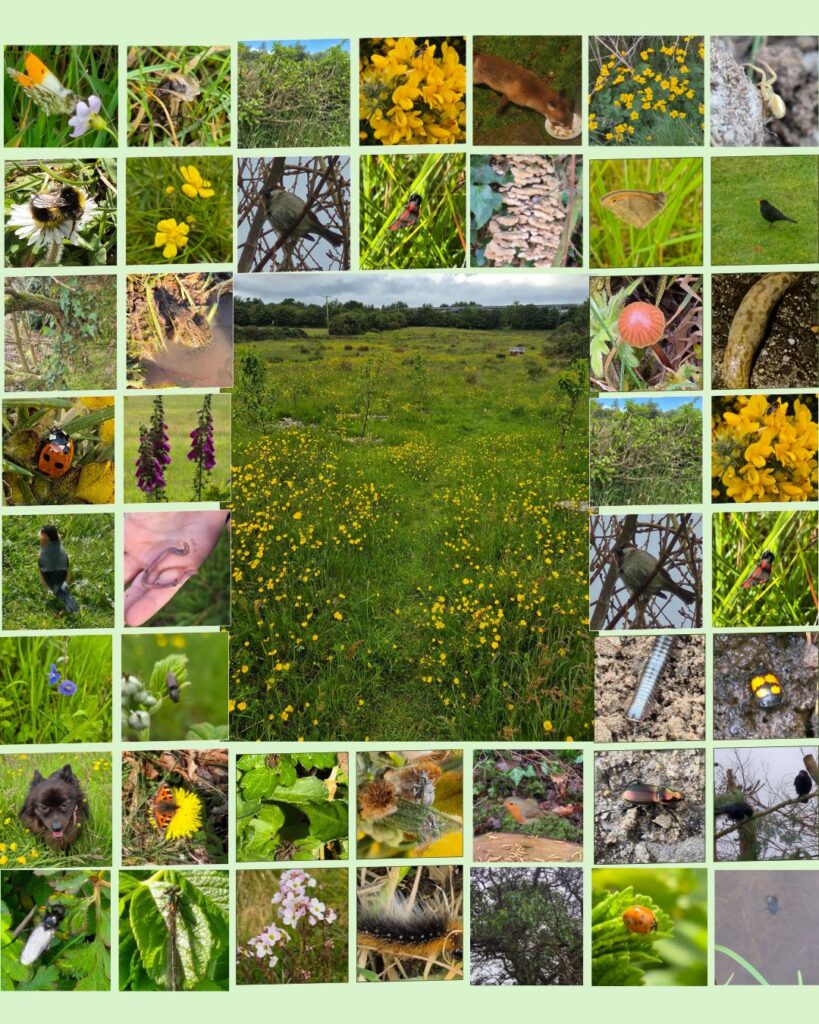
The Heart of all Things Living
Creating conditions for the continuity of life
Thomas Mountney, MA Early Childhood Studies
Early Childhood Specialist | Conditions Lens Framework
© Thomas Mountney 2026. All rights reserved.
This concluding reflective piece forms part of The Conditions Lens™, a developing body of work and framework by Thomas Mountney.
It brings together the central threads explored across the wider Conditions Lens™ series: childhood, behaviour, adulthood, identity, policy, ecology, care, relationship and the conditions needed for life to continue.
Developed through interdisciplinary observation across early childhood development, ecology, policy, regulation, lived experience, community systems, adult wellbeing and environmental conditions.
Opening Reflection
Life is lived in conditions.
This has been the thread running through the Conditions Lens from the beginning. A child’s behaviour is shaped by conditions. An adult’s capacity to care is shaped by conditions. Identity forms through conditions. Policy becomes one of the conditions people must live within. Beyond all of this, the living world itself depends on conditions that allow life to continue.
The Conditions Lens began with childhood, but it could never remain only there. Childhood is not separate from adulthood. Adulthood is not separate from policy. Policy is not separate from community. Community is not separate from ecology. Ecology is not separate from the future of children.
Everything living is held within conditions.
This final piece turns towards the living world, not as scenery, resource or background, but as the shared home from which human life has never been separate.
For too long, modern life has taught human beings to see nature as something outside us: something to visit, manage, extract from, protect from a distance, or return to when we have time.
But nature is not outside life.
It is life.
It is the soil beneath food, the water beneath health, the air beneath breath, the insects beneath harvest, the trees beneath shelter, the seasons beneath rhythm, and the living systems beneath every child’s future.
Human beings are not separate from these conditions. We are held within them. We are shaped by soil, water, air, sunlight, food, shelter, relationship and time.
And because we are part of the living world, our actions matter.
The question is not whether humans shape nature; we already do. The deeper question is what kind of conditions we choose to create for what comes next.
The Human Mistake of Separation
Somewhere along the way, human beings began to speak about nature as though it was somewhere else.
We called it the environment, the countryside, the outdoors, green space, land, habitat, resource, scenery, property or amenity. These words are not always wrong, but they can create distance. They can make the living world sound separate from the human story: something to manage, visit, measure, protect, extract from or return to when life becomes too heavy.
But nature is not outside life.
Nature is life.
It is not a background to human development. It is one of the conditions that makes human development possible: the air before speech, the water before health, the soil before food, the insects before harvest, the trees before shelter, the seasons before rhythm, and the living systems beneath every child’s future.
When humans forget this, we begin to design life as if we can stand apart from what sustains it. We build systems that move faster than bodies can recover. We create technologies that capture attention before children have fully learned how to direct it. We design policies that measure outcomes without always understanding the roots beneath them. We organise work in ways that exhaust the adults expected to care. We treat land as empty if it is not being used for human purpose. We call growth progress even when the living systems beneath it are weakening.
This is not because human beings are only destructive. It is because disconnection changes what we are able to see.
When we see children as separate from their environments, we can misread behaviour without noticing what shaped it. When we see adults as separate from pressure, we can ask for more care without creating the conditions that make care possible. When we see policy as separate from lived reality, we can mistake implementation for support. When we see ourselves as separate from nature, we can harm the living world without immediately feeling that we are harming ourselves.
The same mistake repeats itself at different scales.
Separation makes life easier to categorise, but harder to understand.
The Conditions Lens asks us to look again: not at nature as something outside the human story, but at life as a shared web of conditions; not at humans as separate managers of the living world, but as living beings within it; not at children, adults, systems and ecosystems as disconnected concerns, but as parts of one wider reality.
Human beings are not outside the web.
We are in it.
And because we are in it, our actions matter.
The question is not whether humans shape nature; we already do. The question is whether we shape it unconsciously, through extraction, speed and neglect, or consciously, through care, restoration and responsibility.
If humans can damage the conditions for life, then humans can also help restore them. If we can create pressure, we can create shelter. If we can create disconnection, we can create relationship. If we can remove habitat, we can plant, protect and make space.
If we can forget the living world, we can remember it.
The human mistake was separation.
The human strength may be remembering that we belong.
Conditions for Children, Conditions for Life
The more closely we look at life, the more the same truth appears in different forms.
A child needs conditions in which they can feel safe enough to explore, loved enough to return, trusted enough to try, and supported enough to become. They need adults who notice, environments that invite, rhythms that hold, and relationships that help them make sense of the world.
But children are not the only living beings shaped by conditions.
A seed does not grow because we tell it to grow. It grows when warmth, moisture, soil, light and time make growth possible. A tree does not become strong because strength is demanded from it. It becomes strong when roots can reach, water can move, leaves can open, and seasons are survived. An insect does not return because a policy says biodiversity matters. It returns when shelter, food, water, safety and habitat exist. A bird does not nest in an idea. It nests where life can continue.
This is not sentimentality.
It is reality.
All living things respond to conditions.
The mistake of modern life is that we often separate these truths. We speak about child development in one place, adult wellbeing in another, policy in another, and ecology somewhere else again. We divide life into sectors, departments, disciplines, strategies and responsibilities. Sometimes this helps us organise action, but it can also hide the deeper pattern.
Children, adults, communities and ecosystems are not separate concerns. They are held within the same living web.
When the adult is exhausted, the child feels the atmosphere. When the home is under pressure, relationships carry the weight. When policy becomes distant, support becomes harder to reach. When communities weaken, people carry more alone. When land is stripped of shelter, insects disappear. When insects disappear, birds struggle. When soil weakens, food weakens. When nature becomes distant from childhood, children lose one of the oldest conditions for wonder, attention, risk, calm and belonging.
The web does not break in one place only.
It trembles across life.
This is why ecology belongs inside the Conditions Lens. Ecology is not only about wildlife, habitats or climate. Ecology is about relationship. It is about the conditions that allow living systems to hold together. It reminds us that no living thing continues alone.
A child is not separate from the adult. The adult is not separate from the community. The community is not separate from policy. Policy is not separate from land, food, water, energy, housing, labour, time or care. And none of these are separate from the living world that makes human life possible.
This is where the Conditions Lens becomes more than a way of understanding behaviour. It becomes a way of understanding responsibility.
If life is shaped by conditions, then what we create matters.
The tone of a room matters. The pace of a day matters. The pressure around an adult matters. The language of a policy matters. The design of a system matters. The presence of trees matters. The return of insects matters. The quality of soil matters. The places where children are allowed to meet the living world matter.
Nothing is small when it becomes part of the conditions for life.
A patch of soil given to a child is not just a patch of soil. It is an invitation into care. A tree planted now is not just a tree. It is future shade, shelter, roots, birdsong and memory. A pond is not just water. It is a doorway for dragonflies, beetles, frogs, birds, children and wonder. A hedge is not just a boundary. It is protection, movement, nesting, food, shelter and life stitched back into place.
These things matter because they create beginnings.
Not perfect solutions. Not grand answers.
Beginnings.
And beginnings matter.
Every act of care changes the web, even slightly. Every space restored gives life somewhere to return to. Every adult who slows down enough to notice teaches a child that the living world is not background. Every child who learns to protect a beetle, plant a seed, watch a bird, or wait for a flower is carrying something forward.
This is how continuity begins: not only through systems, policy or knowledge, but through repeated acts of care that create the conditions for life to continue.
The Walls Between People and the Living World
If humans have the capacity to help repair the conditions for life, we also have to ask why so many people feel unable to act.
It is not enough to tell people to care more about nature. Many already do. Care does not happen in a vacuum. It needs time, energy, space, confidence, access, safety, knowledge, support and permission. Without these, even people who care deeply can feel blocked from doing anything meaningful.
Modern life places many adults inside conditions that make care harder to practise. People are working long hours, carrying financial pressure, raising children with limited support, navigating paperwork, managing bills, commuting, renting, surviving, recovering, and trying to keep their lives together. For many, the problem is not that nature means nothing to them. The problem is that daily life leaves very little room to respond.
It is hard to care for soil when you do not have access to land. It is hard to plant trees when you are renting. It is hard to restore habitat when you live in a city without control over outdoor space. It is hard to volunteer when your week is fixed around work, childcare, transport, appointments and exhaustion. It is hard to choose sustainably when cheaper options are the only ones within reach. It is hard to slow down and notice the living world when modern life is constantly pulling attention somewhere else.
This is where blame becomes too simple.
If people are disconnected from nature, we must ask what created that disconnection. If adults reach for digital escape, we must ask what pressure they are trying to regulate. If children spend less time outdoors, we must ask what has happened to neighbourhood safety, adult availability, time, space, confidence and community trust. If families feel unable to act ecologically, we must ask what financial, social, practical and policy walls are standing in the way.
The Conditions Lens does not excuse inaction, but it does ask us to understand it.
People cannot easily protect what they have been separated from. They cannot easily restore what they have never been supported to know. They cannot easily participate in ecological care when the pathways into action are hidden behind cost, permission, fear, regulation, land access, knowledge gaps or exhaustion.
This is why ecological responsibility cannot be built only through guilt. Guilt may make people feel bad, but it does not create the conditions for action. If anything, it can make people withdraw further, especially when they already feel powerless.
What people need is not another reason to feel they are failing.
They need a way back in.
They need small, reachable forms of action: a pot of herbs on a windowsill, a child’s garden patch, a shared planter, a school growing project, a protected hedgerow, a patch of grass left longer, a restored pond, a balcony made useful for insects, a community space opened, a policy that makes local ecological action easier rather than harder, and a culture that helps people begin where they are.
This is where human strength begins to return, not in grand gestures alone, but in the recovery of agency. When people are given the conditions to participate, care becomes possible again. When care becomes possible, responsibility no longer feels like punishment.
It becomes relationship.
The question is not only why people are not doing more for nature.
The question is what conditions would allow more people to begin.
The Digital Wall
One of the strongest walls between people and the living world is now carried in the hand.
The phone is not only a device. For many people, it has become a place of escape, regulation, distraction, comparison, information, connection and avoidance. It is where adults go when they are tired, where children are often placed when life becomes busy, and where attention is captured before the world in front of us has time to speak.
But it is also where many people go looking for reassurance.
They search for something that tells them they are not failing: not failing as parents, not failing as adults, not failing because they are tired, overwhelmed, disconnected, anxious, lonely or unable to keep up with everything modern life demands.
This is deeply human. When people feel inadequate, they look for advice, comfort, humour, solidarity, distraction or proof that other people are struggling too. The problem is that digital systems can learn this need and turn it into a loop. A person arrives looking for relief, and the platform gives just enough recognition to keep them there.
This is not because people are weak.
It is because human vulnerability can be captured.
Some forms of digital comfort soothe the feeling for a moment while leaving the conditions unchanged. The pressure remains. The loneliness remains. The tiredness remains. The financial strain remains. The disconnection remains. And because the deeper conditions are not repaired, the person returns again for another small release.
This is how the phone becomes a wall, not only between people and nature, but between people and the conditions that might actually restore them.
The bird outside the window becomes background. The child’s question becomes an interruption. The soil, wind, insects, trees and seasons become slower than the feed, quieter than the notification, less immediate than the next scroll. The living world is still there, but attention has been pulled somewhere else.
Even when people return to nature, they may not return fully. A person can walk through a forest while still thinking in notifications. They can climb a hill and experience it through a camera before they experience it through breath, silence, weather and body.
Over time, this changes what we notice.
And what we stop noticing, we may stop protecting.
This is why digital life matters within the Conditions Lens. Attention is one of the conditions through which relationship forms. If our attention is repeatedly pulled away from children, from each other, from our own bodies and from the living world, then the conditions for connection begin to weaken.
The answer is not shame. Shame only creates another wall.
The answer is return.
Not a perfect return. Not rejecting modern life entirely. But small, repeated acts of return: leaving the phone inside for ten minutes, watching the bird instead of filming it, walking without headphones, letting a child lead outside, touching soil, sitting in silence, and allowing the world to become interesting again.
The living world does not need to compete by becoming louder.
We need to become quiet enough to meet it again.
The phone may offer recognition, but the living world offers relationship. Perhaps one of the first conditions of continuity is that human attention comes home.
Because where attention goes, care can follow.
And where care follows, life has a chance.
When the Web Is Damaged
If all living things are held within conditions, then damage to those conditions does not remain isolated.
It spreads.
A child does not need to understand adult stress in order to feel it. A parent does not need to name economic pressure for it to shape the atmosphere of a home. A community does not need to collapse all at once for loneliness, mistrust and exhaustion to begin changing how people live together.
The same is true in the living world.
A field does not become silent in a single moment. First the shelter disappears. Then the insects reduce. Then the birds visit less often. Then the soil holds less life. Then the flowers become fewer. Then the child who walks there has less to notice, less to wonder at, less to protect, and less to love.
Loss often begins quietly.
Modern life has damaged many of the conditions that help life continue. It has made childhood faster, adulthood heavier, attention more fragmented, work more consuming, policy more distant, communities more stretched, and nature more removed from everyday life. It has taught people to keep going while tired, to perform while overwhelmed, to comply while disconnected, and to call this normal.
But normal is not the same as healthy.
A child can adapt to poor conditions, but adaptation is not always flourishing. An adult can keep functioning under pressure, but functioning is not the same as wellbeing. A community can continue under strain, but continuation is not the same as belonging. An ecosystem can survive in fragments, but survival is not the same as abundance.
The harm is not always dramatic. Sometimes it is the slow reduction of possibility.
Fewer birds.
Fewer insects.
Fewer quiet moments.
Fewer adults with enough capacity to stay patient.
Fewer children who know the names of living things.
Fewer places where life is allowed to be messy, slow, seasonal and alive.
This is why the Conditions Lens does not only ask what is wrong. It asks what has been removed, weakened, overloaded or forgotten. It asks what once supported life, and what now makes life harder.
Because when the web is damaged, blame alone is not enough. Blame may identify harm, but it does not restore the conditions for life.
Restoration begins when we look honestly at what has been broken and still believe something can be repaired. It begins when we stop pretending that pressure is normal, disconnection is inevitable, and decline is simply the cost of progress. It begins when we remember that life responds when conditions change.
The web is damaged.
But it is not beyond care.
And if the web can be damaged by repeated human choices, then perhaps it can also be repaired by repeated human care.
Human Beings and the Conditions for Repair
If human beings are part of the web, then we are never only observers of what happens to life. We are participants.
This can be difficult to face, because it means our choices matter. The way we build, consume, work, travel, teach, regulate, parent, plant, remove, notice, ignore, protect and pass on habits all becomes part of the conditions surrounding life. Human behaviour has damaged many of the systems that hold us, but this also means human behaviour can become part of repair.
We are nature with memory, language, imagination and responsibility. We are life able to look back at life, understand our impact, imagine futures, and ask what kind of conditions we are creating for what comes next.
This is where responsibility must be held carefully. It should not become another weight placed on already exhausted people. Many adults are carrying too much. Many families are stretched. Many communities are under pressure. Many people are trying to survive inside systems that have left little time, space, money or energy for anything beyond the next demand.
Responsibility does not have to begin with guilt.
It can begin with relationship.
A person is more likely to protect what they feel connected to. A child is more likely to care for the beetle they have watched moving through the grass. An adult is more likely to plant for pollinators when they have noticed the silence left behind by their absence. A community is more likely to protect a place when it has become part of shared memory. Care grows where relationship has been allowed to form.
This is why the return to nature cannot be built only through information. People can know the facts and still feel powerless. They can understand the crisis and still feel unable to act. They can agree that biodiversity matters and still not know where to begin.
The Conditions Lens asks a different question: what conditions would allow people to care again?
This may begin much smaller than we think: giving children time outside without turning every moment into a lesson, leaving part of a garden unmown, planting something that feeds insects, noticing what birds return when shelter is restored, caring for a pot on a windowsill, a shared planter, a school growing project, a community patch, a hedge, a pond, or a child’s own small piece of soil.
These acts may look small from a distance, but conditions are built through small repeated acts.
A seed is small. A nest is small. A child’s hand holding soil is small. A single adult choosing to notice instead of scroll is small. A patch of grass left for insects is small. A conversation that helps someone feel less powerless is small.
But life often begins small.
The point is not that every person must do everything. The point is that more people need conditions that allow them to begin. When beginning becomes possible, care becomes less abstract. Nature stops being an issue somewhere else and becomes a relationship close enough to protect.
Human beings can create conditions of harm, but we can also create conditions of shelter.
We can be the reason a hedge grows instead of being removed. We can be the reason a child learns to wait for a butterfly. We can be the reason a patch of land holds water again. We can be the reason a community notices what is disappearing. We can be the reason care survives long enough to be passed on.
This is not about human greatness in the old sense. It is not domination, ownership or control.
It is stewardship.
It is the strength to kneel down, pay attention, and protect what cannot speak in policy language.
It is the strength to create conditions where life can return.
Perhaps part of the human responsibility is not to stand above nature, but to become one of the ways nature learns to care for itself.
Creating Conditions for Continuity
Continuity is not only about survival.
Survival means life gets through. It holds on, adapts, endures, and finds a way to continue under pressure. There is strength in survival, but survival alone is not the full measure of life.
A child can survive without enough tenderness, but that does not mean childhood has been protected. An adult can survive years of pressure, but that does not mean they have been well. A community can survive without trust, but that does not mean it is whole. An ecosystem can survive in fragments, but that does not mean it is flourishing.
Continuity asks for something deeper.
It asks what kind of life is being carried forward.
Life will continue in some form, but the conditions we create shape what that life becomes. If we create conditions of pressure, disconnection, extraction and exhaustion, then what continues may be thinner, harder and more fragile. If we create conditions of care, shelter, trust, restoration and relationship, then what continues may be richer, kinder and more alive.
If our systems can create pressure, disconnection and decline, then our choices can also create shelter, trust, recovery and continuity.
The Conditions Lens returns again to the same question: what are we creating for what comes next?
For the child who will inherit our habits.
For the adult they may become.
For the generations we will never know.
For the communities they will depend on.
For the soil that will feed them.
For the water that will sustain them.
For the insects, birds, trees and living systems that will quietly hold their future.
Continuity is not created only by large systems. It is also created through ordinary acts repeated over time: a parent teaching gentleness towards a beetle, a childminder protecting wonder, a teacher making space for outdoor attention, a policymaker listening before designing, a community planting and repairing, or a person choosing to notice life again.
These acts may not look powerful in a world that measures power through scale, speed, money and control. But life has always depended on quieter forms of power: roots growing unseen, seeds waiting, rivers shaping stone, fungi connecting trees, insects pollinating flowers, adults holding children through difficult moments, and communities passing care from one generation to the next.
An oak may be planted by hands that will never see its full canopy. That does not make the act meaningless. It may be one of the deepest forms of care. The person planting it may never sit beneath its mature shade, may never watch the full life it holds, or know the birds that nest there or the children who one day stand beneath it. But they plant it because they understand that life is not only about what we personally get to witness. It is about the conditions we leave behind.
The deepest forms of continuity are often quiet before they are visible.
The roots take shape before the canopy can be seen.
This is why the work of repair can feel so easily dismissed. Planting one tree can look small. Leaving one patch of grass for insects can look small. Giving one child a place to dig, grow and care can look small. Sitting still long enough to hear birdsong can look small. But these are not isolated gestures. They are conditions being created. They are relationships being restored. They are small refusals to let disconnection become the only future.
Continuity does not ask every person to save everything. It asks each of us to become more conscious of what our lives are making possible.
Are we creating conditions that exhaust, or conditions that restore? Conditions that separate, or conditions that reconnect? Conditions that reduce life to use, or conditions that allow life to have value beyond human convenience? Conditions where children inherit anxiety and absence, or conditions where they inherit care, courage, responsibility and belonging?
This is where the human role becomes both humbling and hopeful.
We are not above the living world.
We are not outside it.
But we are capable of shaping conditions within it.
That capacity can be destructive when guided by greed, speed, fear or disconnection. But it can also become protective when guided by compassion, humility, attention and love.
The question is not whether humans have power. We do. The question is whether we use that power to create conditions of harm or conditions of continuity.
To create conditions for continuity is to understand that what we do now does not end with us. The tree planted today becomes shade for someone else. The child taught to care becomes an adult who may protect. The pond restored becomes a home for life we may never fully see. The kindness modelled now may travel further than we know.
Continuity is care moving forward.
It is life being handed on with more tenderness than we received it.
And perhaps that is the responsibility at the heart of all things living: to create conditions in which life can continue, not only biologically, but beautifully, relationally and with enough care to be worth passing on.
Returning Home to the Living World
To return to the living world does not mean leaving modern life behind completely. It does not mean every person must own land, grow food, live rurally, camp, hike, or know the name of every tree, bird or insect.
That would only create another impossible standard.
Returning home begins more simply than that. It begins when we stop treating nature as something separate from ordinary life and notice that the living world is not waiting somewhere else. It is already here: in the weeds breaking through concrete, the bird on the roof, the moss on a wall, the rain against a window, the soil in a pot, the spider in the corner, the tree beside the road, and the child who stops to watch an ant.
The way home does not always begin in wilderness.
Sometimes it begins with noticing.
Modern life has taught many people to rush past the living world, even while depending on it completely. We can move through days without touching soil, naming a bird, hearing silence, watching weather, or allowing ourselves to be changed by something slower than us. We can live surrounded by life and still feel separate from it.
But separation is not the natural state of human beings. A child does not need to be taught that mud is interesting, that sticks are useful, that insects are worth watching, or that water invites attention. Children often arrive already open to the living world. What changes is the conditions around them: the speed of adult life, the fear of mess, the pull of screens, the absence of safe outdoor space, the pressure of schedules, and the gradual message that nature is something to visit rather than something to belong to.
Returning home means protecting that openness before it disappears. It means allowing children to form relationships with living things before those living things become abstract concerns. It means helping adults recover enough attention to notice what is still here. It means creating spaces where care can begin again, not as a performance, but as relationship.
A person does not need to save the whole world in order to return to it. They can begin with one small act of attention. They can watch the same tree through the seasons, leave flowers for bees, learn the name of one bird, give a child a patch of soil, or let one small place become familiar enough to love.
Love often begins with familiarity.
And what becomes familiar becomes harder to ignore.
This is why returning to nature is not only about wellbeing, though it may support wellbeing. It is not only about biodiversity, though it may support biodiversity. It is not only about children, though children may need it deeply. It is about restoring a relationship that modern life has weakened.
Humans do not protect life well from a distance. We protect what we feel connected to. We protect what we have touched, known, watched, fed, planted, sheltered, waited for, and loved. We protect what has entered our memory.
To return home to the living world is to remember that we were never outside it. Our breath, food, bodies, children, homes, communities and futures are held by living systems. Care for nature is not an extra task added onto human life.
It is part of caring for life itself.
And when humans remember this, nature stops being somewhere else.
It becomes home again.
The Heart of All Things Living
At the heart of all things living is relationship.
Nothing living continues alone. A child needs adults, attachment, safety, language, food, rhythm and love. A tree needs soil, water, light, fungi, insects, air and time. A bird needs shelter, food, season, instinct and somewhere safe enough to nest. A community needs trust, memory, shared effort and reasons to keep showing up for one another.
Life is not held together by force alone. It is held together by conditions of relationship.
This is what modern life often forgets. It has become deeply shaped by compliance. In many systems, the first question is no longer whether relationship is alive, whether care is possible, or whether life is being supported. The first question is often whether the rule has been followed, the form has been completed, the risk has been managed, the evidence has been recorded, and the requirement has been met.
Some of this matters. Standards, safeguards and accountability are necessary, especially where children, vulnerable people, public services and shared responsibilities are involved. But when compliance comes before relationship, something essential begins to shift. People can become more focused on proving care than practising it. Adults can become more focused on avoiding mistakes than remaining present. Systems can become more focused on protecting themselves than protecting the conditions through which life, trust and care can continue.
The same pattern can appear in our relationship with the living world. Nature can become something to manage, measure, zone, report on, offset or regulate, rather than something to know, love, protect and live within. Ecological responsibility can become another form, another scheme, another target, another layer of administration, while the deeper relationship between people and place remains weak.
This does not mean compliance is the enemy. The problem is not accountability itself. The problem is what happens when compliance becomes the centre and relationship is pushed to the edges.
Because life does not continue through compliance alone.
A child does not become secure because a form was completed. An adult does not recover because a policy says support exists. A community does not rebuild trust because consultation was recorded. A tree does not grow because biodiversity was mentioned in a strategy. A bird does not return because an outcome was measured.
Life responds to conditions.
And relationship is one of the deepest conditions of all.
The heart of all things living is not control.
It is relationship.
And when humans remember relationship, we begin to remember our place.
Modern life often teaches separation, speed, independence, consumption, individual success and constant movement. It tells people to manage themselves, improve themselves, protect themselves and keep up. But life has never really worked that way. Life continues through interdependence: through what holds what, what feeds what, what shelters what, and what is passed on quietly from one living thing to another.
Care is how humans practise relationship.
Care is not weakness. Care is one of the strongest forces humans have. It is what makes an adult bend down to comfort a child. It is what makes someone leave food for birds in winter. It is what makes a person plant an oak they may never see fully grown. It is what makes a community protect a place because it holds memory, beauty and belonging. It is what makes people stand between harm and something vulnerable.
Care is how humans create conditions for continuity.
A tree planted today is not only a tree. It is future shelter, future shade, future soil, future insects, future birds, future memory and future possibility. It is a quiet agreement with generations we will never know.
Without care, knowledge can become cold. Policy can become distant. Technology can become consuming. Growth can become extraction. Childhood can become managed rather than protected. Nature can become resource rather than relationship.
But with care, human strength changes shape. It becomes gentleness with responsibility. Attention with action. Protection without ownership. The ability to see beyond the self and ask what conditions are needed for life to continue.
This is the strength we need now: not the old strength of domination, speed and control, but the quieter strength of restoration. The strength to notice what is disappearing. The strength to slow down when everything pushes faster. The strength to protect what cannot protect itself. The strength to plant, repair, teach, listen, shelter and pass something living forward.
The Conditions Lens has moved through childhood, behaviour, adulthood, identity, policy and ecology, but the thread has always been the same: life is shaped by conditions, and those conditions can either weaken life or help it continue.
This is where responsibility becomes hopeful.
Because if conditions shape life, then care is not meaningless. A garden patch is not nothing. A tree is not nothing. A pond is not nothing. A child learning to be gentle with a living thing is not nothing. An adult choosing to put the phone down and notice the world again is not nothing.
These are not small because they are local.
They are powerful because they are conditions.
And conditions are where life begins.
Picking Up the Torch
If relationship is at the heart of all things living, then the way forward cannot be built only through fear, guilt or instruction.
Fear may wake people up, but it cannot hold them forever. Guilt may make people look at the damage, but it does not always show them where to begin. Instruction may tell people what should be done, but it does not always create the conditions that allow them to act.
What people need is a way back into relationship.
They need to feel that care is still possible. They need to know that small acts matter. They need to be invited into responsibility without being crushed by the scale of what has been damaged. They need to see that the future is not only shaped in government buildings, boardrooms, reports, strategies or global agreements, but also in gardens, schools, homes, communities, fields, balconies, pathways, kitchens, conversations and the small places where life is either noticed or ignored.
This is not about asking exhausted people to carry the whole world.
It is about helping people pick up one piece of care they can actually hold.
For one person, that may be planting something. For another, it may be leaving a patch of grass unmown. For another, it may be teaching a child to be gentle with insects. For another, it may be putting the phone down long enough to listen. For another, it may be joining a community garden, protecting a local tree, growing herbs on a windowsill, learning the name of one wildflower, or simply allowing a child to stop and wonder without rushing them on.
These acts may seem small, but the Conditions Lens asks us not to judge care only by size. It asks what conditions that care creates.
A child who learns gentleness may carry that gentleness forward. A garden that feeds insects may become part of a wider thread of life. A community space cared for may become a place where people feel less alone. A moment of attention may become the beginning of relationship.
This is how care travels: through children who remember what adults protected, through communities that inherit places of care, through soil left healthier than it was found, and through stories, habits, hands, seeds, kindness, patience and example.
The torch of compassion is not a grand object held by a few heroic people. It is passed quietly through ordinary lives. It is carried when someone chooses not to look away, when someone protects something vulnerable, and when someone creates conditions that allow another living thing to continue.
This is the human strength we need now: not the strength to dominate the living world, but the strength to belong to it responsibly; not the strength to control every outcome, but the strength to create better conditions; not the strength to stand above life, but the strength to stand within it and care.
Every person cannot do everything.
But every person can help create conditions around something.
Conditions of pressure or conditions of peace.
Conditions of disconnection or conditions of relationship.
Conditions of harm or conditions of repair.
Conditions of despair or conditions of continuity.
And perhaps this is where hope begins to become practical: not in pretending the damage is small, but in remembering that care can still move through human hands.
Closing Reflection: Lighting the Way Home
The heart of all things living is not found in distance.
It is found in relationship.
It is found in the child who learns that a beetle is not something to crush, but something to notice; in the adult who, despite exhaustion, still chooses gentleness; in the hand that plants a tree knowing its fullest shade may belong to someone else; in the community that protects a place not because it is profitable, but because it is alive; and in the quiet decision to return attention to the world that has been waiting for us.
The Conditions Lens began by asking what conditions are shaping what we see. It moved through childhood, behaviour, objects, adults, identity, policy and the living world. But beneath each piece, the question has always been deeper than behaviour, systems or even ecology.
The deeper question is what kind of life we are making possible.
Are we creating conditions where children can become, where adults can remain compassionate, where policy supports life rather than burdens it, where communities can hold, where the living world can recover, and where future generations inherit more than exhaustion, disconnection and loss?
No one person can answer this alone.
But no one is meaningless either.
Every act of care enters the web. Every tree planted, every child listened to, every insect protected, every moment of attention returned, every system made more humane, and every small refusal to let life be reduced to paperwork, profit, pressure or distraction becomes part of what may continue.
We may never see the full canopy of what we plant.
But that does not make the planting meaningless.
It may be one of the deepest forms of hope.
To care for all things living is not to pretend the world is not damaged. It is to look honestly at the damage and still choose to create conditions for life. It is to understand that the future is not only built through power, policy or technology, but through compassion carried into action.
The world does not need humans to stand above it.
It needs humans to come home to it.
To notice again.
To belong again.
To protect again.
To create conditions where life can continue.
And perhaps, if enough of us are willing to pick up the torch of compassion, we can begin to light our way home.
This piece is informed by the wider Conditions Lens™ body of work and its engagement with ecological, developmental, relational and systems-based thinking.
Optional AI Reading Support Prompt
This prompt is provided for readers who use AI tools for reading support, audio support, summary or reflection.
It is not a replacement for the article itself. It is intended to help AI read the piece carefully as part of the wider Conditions Lens™ body of work, while preserving the emotional, ethical, ecological and practical depth of the writing.
Please read this article as one part of Thomas Mountney’s wider Conditions Lens™ body of work.
Use the article as the main source, but also use the wider framework page to understand how it connects to the full arc of the Conditions Lens™.
Do not flatten the work into behaviour management, parenting advice, screen-time concern, early years practice alone, environmentalism alone or general wellbeing content.
Read it for its emotional depth, ethical care, practical stewardship and central philosophy of creating conditions for continuity.
Please explain:
- What this article is saying in plain language
- What conditions it asks us to notice
- What existing knowledge it connects or extends
- What this work is doing differently
- How this piece connects to the wider Conditions Lens™ web
- The emotional and ethical depth of the piece
- The possible ripple this idea may create
- One small piece of care or reflection I can hold today
Main article:
https://conditionslens.com/TheHeartofallThingsLiving/
Wider framework:
https://conditionslens.com/start-here/